

Publishing workflows
The editor supports multiple workflows for publishing documentation updates. The workflow you use depends on your repository’s branch protection rules and the branch you work on.| Branch type | Branch protection | Available actions |
|---|---|---|
| None | Publish directly | |
| Deployment branch | Pull requests required | Create a branch to make changes |
| None | Save in branch, create a pull request | |
| Feature branch | Pull requests required | Save in branch, create a pull request |
Save changes
As you edit, the editor tracks your changes.- New or deleted files.
- Content edits in pages.
- Navigation structure changes.
- Media uploads and organization.
- Configuration updates.
Publish your changes
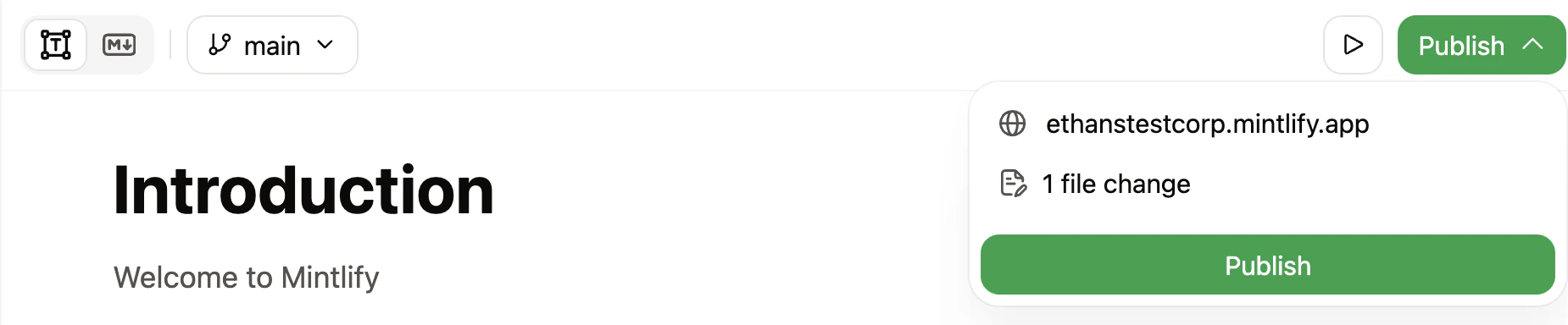
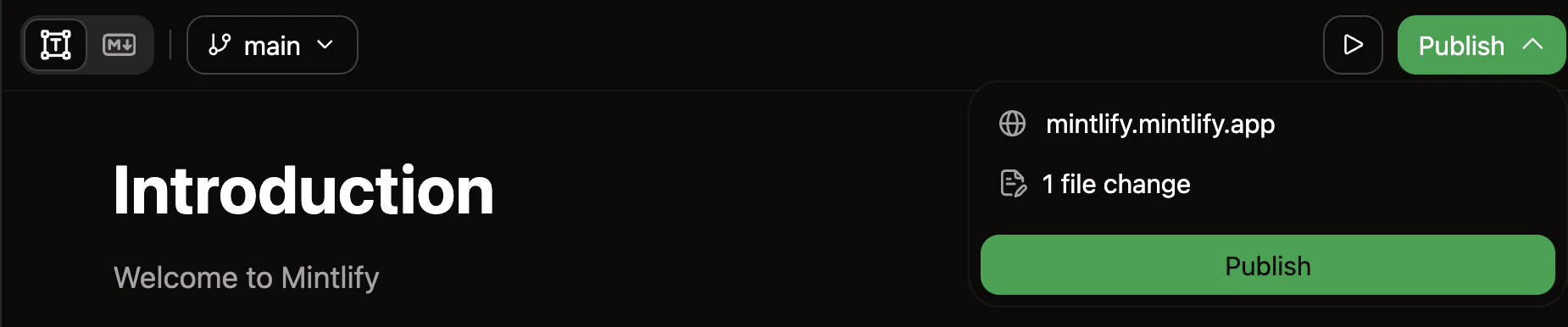
Click the publish button in the toolbar to open the publish popover. The actions available depend on your branch and branch protection rules.- Publish: On the deployment branch without branch protections, click Publish to commit and deploy your changes immediately.
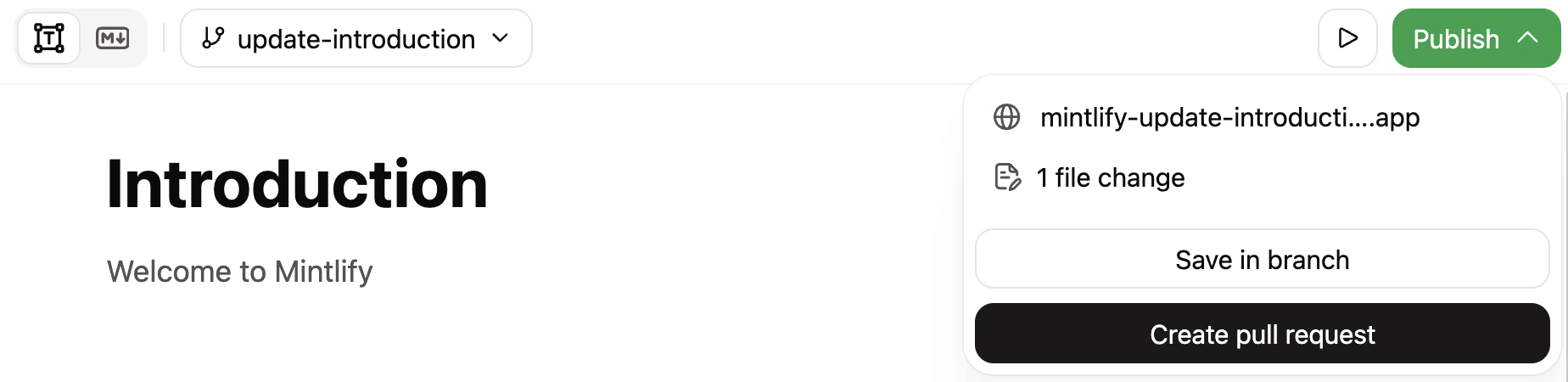
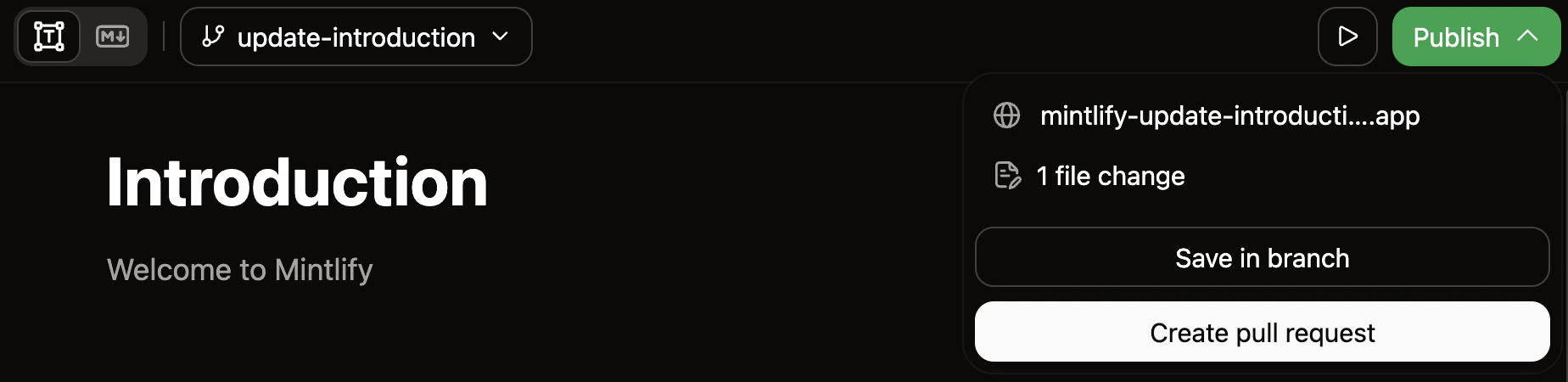
- Save in branch: On a feature branch, click Save in branch to commit your changes to the current branch.
- Create branch: On a protected deployment branch, click Create branch to move your changes to a new branch.
- Create pull request: On a feature branch, click Create pull request to open a pull request targeting your deployment branch.
Your live documentation site updates after Mintlify builds and deploys your published changes. This typically takes 30 seconds to a few minutes. Check the deployment status of your changes on your dashboard.
Review and merge pull requests
When a pull request is open for the current branch, the publish popover shows its review status:- Approved: The pull request has been approved and is ready to merge.
- Changes requested: A reviewer requested changes before the pull request can merge.
- Awaiting review: The pull request is waiting for a review.
If your repository requires approvals before merging, Merge and publish is only available after the pull request is approved.
Resolve conflicts
Conflicts occur when your branch and the deployment branch have incompatible changes to the same files.What causes conflicts
Conflicts happen when you try to merge branches with incompatible changes to the same files.- You and another team member edit the same lines in a file on different branches.
- You move, rename, or delete files on one branch and modify them differently on another branch.